I don’t know if I’m going to be well enough to make any more of my Cancer Video Diaries so this blog post may have to serve in place of the next update. I’ve not posted a detailed update for some time, as I’ve just not been well enough, but I think most people will have picked up that my previous diagnosis of having had the “all clear” has now changed to having incurable cancer which has spread, firstly to my bones, and then to my liver and lungs. I so, wanted to be writing a positive post at this time, but it seemed that, as far as my own situation is concerned, that is not possible.
I am writing this during my second stay in hospital in the past couple of weeks. I came in this time, largely because I could get out of bed due to pain in my back, and, when I did I was gasping for air after a few seconds. I’ve been lying in hospital for three days having oxygen pumped up my nose, and antibiotics run into me via a drip. Yesterday, my Oncologist came to see me. He said that I am in a critical state at the moment. The aim is to get my pain levels and breathing to a level where it is safe to to let me go home. If they can achieve that it will be a case of looking at a variety of treatments which could give me a few more years of active life. If that objective cannot be attained then the end could come very soon. So, at the moment, I am totally focused on getting well enough to get home. As I said, I look for the positive in everything.
I just want to thank those of you, it must easily run into thousands, who have sent me messages of goodwill. They really help. As do the financial contributions you make. If you still want to make a contribution you can do so on a one-off basis at http://www.paypal.me/civicstories or regularly at http://www.patreon.com/johnpopham Your money will now go towards equipment and adaptations that I now need to make my life liveable and it might even go, in a small way, to helping my wife, Portia, my true rock, to rebuild her life.
But I am not done here. I want, with my family’s help to build a legacy which is based on my passionate commitment to using new technologies to promote equality of opportunity. If you can help, please email me at john.popham@johnpopham.com. Hopefully there will be more on that shortly. Just in case there isn’t, please contact portia.ea.robertspopham@gmail.com.
If you follow my social media output elsewhere, you will know that my situation has recently changed, from an “all-clear” from Cancer, to a position where it has now spread and is incurable. I don’t yet know how long I’ve got, or what I will be capable of doing, and for how long for. But what this kind of diagnosis does do is to concentrate the mind about some of the big issues I have grappled with in my life and career, and what could be done actually to make a lasting difference, rather than a short-term fix.
So, this is the first of a series of blog posts in which I am going to set out some of the lessons I have learned from my life and career. A particular theme will, I think, be the blockers and gate-keepers I have met in my life who have frustrated my aim to assist people with low incomes to live life to its fullest potential.
Just about everything I have done in my career, and also in a lot of my so-called “spare” time, has been driven by my conviction that we live in a painfully unfair society which blocks off opportunities to live a good life for so many of our citizens. A big chunk of my career, particularly the early days, was spent in activities designed to encourage local communities to build their own capacity to improve the living conditions of themselves and their neighbours by creating job and training opportunities and stimulating economic activity in areas where there was currently little or none.
The Blockers
This was when I first came up against the gate-keepers and blockers. I never had any training in Community Development or related techniques, and I approached those disciplines in what I saw as a fairly self-evident way. I always saw it as my role to secure support and resources which might help the people I worked with achieve some of their ambitions and then act as a back-seat-driver who had some access to the levers of power which might be pulled to smooth the way. The first kind of blockers I came across were the trained Community Development Workers, some of whom looked down on me because I didn’t speak the same language as them, which was a dead giveaway that I hadn’t had the training they had had. The point of view I came up against time and again was the idea that I didn’t understand how powerless these people were, and I therefore shouldn’t be challenging them to take risks or do anything outside their comfort zones, because I would be setting them up to fail. My view was that most of the problems faced by disadvantaged people were down to money, or rather, lack of it. That’s why I worked to try to generate economic activities which would put money in local people’s pockets and keep that money re-circulating around local economies. But the Community Development blockers told me that there is no way the people in those communities would ever be able to take such bold steps and the priorities should be to help them campaign for better housing conditions, increased benefit payments, and local play areas, etc. While I wasn’t in any way opposed to those kind of actions, it was the way this was presented to me as a binary choice which was so frustrating. I always thought it obvious that people’s life choices are improved by increasing their income and increasing the prosperity of the areas they lived in, but, in the beginnings of my journey, at least, I was constantly being told that all that was a step too far, and I should stop distracting community members from the quest to persuade the local and national state to put resources into improving the housing. What was particularly frustrating was that these particular blockers used the language of empowerment while seeking to shield the people they worked with from any kind of economic improvement.
My worldview is a million miles away from Thatcherism, but the community development blockers were always ready to throw “Thatcherite” as an insult at me, because I dared to introduce economic development into the equation. That hurt me a lot, and I struggled to understand why they couldn’t see that being poor is at the heart of the problem. What I wanted to do was to establish mechanisms whereby local people could generate their own local economic activity, control who was employed in the enterprises and ensure that money stayed in the local area as much as possible. Apparently, this approach went against everything that the community development workers I encountered at the time had been trained to do. It made every improvement I sought to pursue all the harder to achieve.
I was initially diagnosed with cancer in February 2020. In July 2020 I was told I was Cancer-free. One month later I was told that the cancer had spread to my spine and would be incurable.
There are a small (but growing) number of lovely people who have been providing me with some financial assistance to help me and my family get through this situation, which is obviously made worse by the current pandemic. I won’t say who they are because I am not sure they want me to publicise it; but I am extremely grateful.
For years now I have been exploring myself the different hooks that can turn people on to using digital tools which they previously hadn’t considered they needed, as well as advocating that others do the same. One of the incidents which sticks in my mind through the years of taking this approach came in a village in deep, rural Lincolnshire, where I was travelling with the mobile library trying to encourage local residents to sign up to get better broadband connections. I was engaged in quite a long conversation with a woman who was, I thought, surprisingly young to be a digital refusenik, but who was proving to be a hard nut to crack in her determination to insist that the internet had no part to play in her life. This was during the 2012 Olympics, and in a corner of the mobile library, live coverage was playing on my iPad via BBC iPlayer, using the library’s satellite broadband connection. As we talked a women’s rowing race began which resulted in the Great Britain team winning its first Gold Medal of the games. The lady I was talking to broke off from our conversation to get very excited about the race, leaping up and down with joy as the British team crossed the finish line. When she had calmed down, I said to her “there, you do need the internet, after all”. She would not believe me that the signal for what she had watched came over the internet, believing that my iPad was a portable TV. She was shocked at what the internet could be used for. And this was in 2012. Watching TV and video over the internet has become a much more prominent feature in people’s lives since then, with the ubiquity of YouTube and Netflix, among other streaming platforms.
2020 has been an extraordinary year, with large numbers of people turning to practices they never previously thought would be part of their lives. An important factor in this trend has been the adoption of video conferencing both among those who, while doing their daily jobs, had previously eschewed anything other than face-to-face meetings involving expensive, time-consuming, and environment-damaging travel, and among people who had previously spurned new technologies. The latter is to be welcomed, and it is to be hoped that the newly acquired skills thus gained will both continue to be used beyond the current crisis, and spread into other aspects of their lives, acting as an important stepping-stone over the barriers to new technology adoption which had previously hampered them.
One of the things that people newly turned on to technology might now being doing is exploring the cornucopia that is the vast video library offered by YouTube (other video platforms are available). And something which is newly available on YouTube is complete live coverage of the 2020 County Cricket season. For a couple of years now, some of the Counties had been offering live streaming of home games from one fixed camera which covered just what was happening as the bowler ran up and the batter hit (or didn’t hit) the ball, which was good, but frustrating in that a good deal of the action took place outside the frame of the camera. Now, possibly prompted by the fact that spectators cannot get into the grounds, the Counties are offering multi-camera live-streaming which covers the action all over the field.
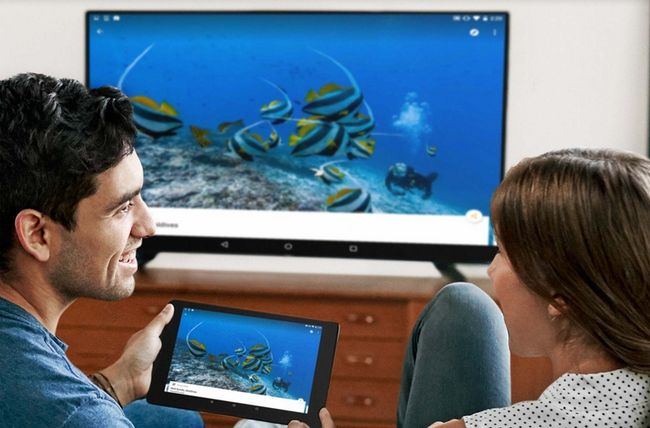
It’s been some time since I last went to a County Cricket Championship match. But, when I did, I looked around and I was pretty sure I was more or less the only person there between the ages of 16 and 65. To say that ordinary County Cricket matches get low crowds is probably something of an understatement, but a big proportion of the audience it does get is over retirement age. So, my feeling is that there must be quite a few older people who want to watch live cricket, but, because of Coronavirus, are not able to. So, do you know someone in this position who is struggling to watch games because they don’t have the digital skills to access YouTube? And they possibly won’t know that you can watch YouTube on your TV. So, in the hope that I can help a few people benefit from the digital world who would otherwise not do so, here is a guide to watching YouTube videos on your TV.
If you have a Smart TV
If you are fortunate to have a Smart TV manufactured in the past few years, you can probably access YouTube directly from your TV. The first thing to say is that for this method to work, you must have a working internet connection in your house, and your Smart TV must be connected to it. All Smart TVs are different, but, as a general rule, the remote control will have a “Home” button on it. Sometimes it will be a big button with a picture of a house on it, sometimes it will have “home” written on it. If you press that button it should take you to a menu on the TV which has various different apps on it. You should be able to scroll through to the red YouTube icon, press it and you will be taken to YouTube.
Once you are in YouTube you will probably be asked to log in or set up a new account. You can ignore this and go through to the “search” menu. Type your favourite County Cricket team into the search box and the first thing that comes up should be that team’s channel. Click on that and you will be taken to all the videos the club has posted, including any live videos.
The following guides are all for people without Smart TVs.
Sky TV
If you are a Sky TV customer you can access YouTube via your Sky Q box. As far as I am aware, if you have an older Sky box (i.e. not Sky Q), you won’t be able to do this. Press the “Home” button on your TV remote, and then scroll through the menu until you see “Online Video”. Click on this one and you should then see the red YouTube icon. Click on it and you will be taken to YouTube. Now follow the guide in the paragraph in italics above.
Virgin Media
If you are a Virgin Media customer you can access YouTube through your Tivo box. Press the “Home” button on your remote control. Scroll down the menu to “Search and Discover”. Scroll down the menu that pops up from here and click on YouTube. Now follow the guide in the paragraph in italics above.
BT TV
As far as I am aware you cannot access YouTube from a BT TV box. Please tell me if I am wrong.
NOW TV
Now TV is a service from Sky which involves purchasing a set-top box or “stick” to connect to your TV to watch Sky Channels over the internet. Although you have to pay for the Sky Channels, there is also a lot of free content available on this system, including YouTube. You should be able to see YouTube on the main menu of the box when it starts up. Please don’t forget that the box must be connected to the internet. Now follow the guide in the paragraphs in italics above.
Amazon Fire TV Stick
This is my favourite way of turning a non-smart TV into a Smart TV. The Fire TV Stick is an inexpensive and very small device which plugs into the HDMI socket of your TV and gives it all the elements a Smart TV would have. You must connect the Stick to the internet. Once you have set up your Fire TV stick, scroll through the menu until you see the red YouTube icon. Now follow the guide in the paragraph in italics above.
Google Chromecast
The Google Chromecast is a small, inexpensive device which plugs into the HDMI socket of your TV. It allows you to stream content from your smartphone or tablet to your TV. Your smartphone/tablet and TV need to be connected to the same wifi network, and the Chromecast needs to be set up using the Google Home app on your phone or tablet. I’d suggest this needs to be done by someone with at least a little bit of technical knowledge. Once you have set the Chromecast up and connected it to your phone/tablet, open the YouTube app on the phone or tablet, start playing a video and then hit the “TV” button to start the video playing on the TV.
I hope this guide goes someway to helping at least a few people who are otherwise isolated at home and are missing their County Cricket.
I run the Doctor Tech Show which is broadcast live on YouTube at 12 noon every Monday and discusses issues around communication technologies for people without digital skills. If you’d like to get involved please email doctortechshow@gmail.com.
I was diagnosed with cancer in February 2020 see here
There are a small amount of lovely people who have been providing me with some financial assistance to help me get through this situation, which is obviously made worse by the current pandemic. I won’t say who they are because I am not sure they want me to publicise it; but I am extremely grateful.
If you feel like helping me out in any way, please get in touch or you can support me on a regular basis via Patreon or as a one-off here.
Thanks for reading. I hope to see you all again when this is all over.
For a long time now I have been raising the question as to why there are so many Business programmes on TV and radio, indeed daily slots on many channels, and hardly anything about community activities. It’s all part of a culture which celebrates money-making and gives far too little prominence to those people and organisations which put the wellbeing of their fellow human beings at the forefront of their agenda. Of course, this has changed during the Coronavirus crisis; not only has there been an increased focus on mutual activity to reach out to those most affected by the current situation, but we have seen a a welcome change of emphasis so that we are at last seeing an increased recognition of the people who toil to make our society function with low levels of remuneration. It’s ironic, nevertheless, that one of the most prominent campaigns, the fight to get the Government to fund free school meals during the summer holidays, has been spearheaded by Marcus Rashford, a highly-paid Premiership footballer, albeit one who drew on his own background in receipt of free school meals to frame the message. It demonstrates, however, that the megaphone of public voice resides largely in the same corridors of wealth and power.
Having spent most of my life working in some form to encourage people to be more community-spirited, I have been much encouraged by the recent upsurge in attention on such activities. This has coincided with the publication of a seminal book “Humankind” by Rutger Bregman. Bregman argues that the prevailing story of most of our society, that people are fundamentally bad and need leaders and laws to keep them in check, is wrong, and that evidence shows that most people are actually good, and their first instinct is actually to be kind, collaborative and helpful to each other. The “people are bad” story is one designed by the rich and powerful to justify their position in society and legitimise the need for coercive laws and control. I would argue that the predominance of business- focus in our media is a key part of this agenda, celebrating money-making over the health and well-being of the majority of society. And now, before you jump in and say that society needs money-making for a successful economy, or that most people are involved in some kind of business activity, I’ll counter that the business programmes served up by our TV and radio tend to be focused on multi-billion dollar corporations whose principal aim is to syphon resources into the bank accounts of their shareholders rather than the entrepreneurial activities which keep most of our communities ticking over. And they are part of the representation of the hero entrepreneur whose role is to save society by generating bundles of cash.
So, I’ve decided that the time has come to stop moaning about this imbalance and do something about it. A few weeks ago I started the Doctor Tech Show, a weekly live-streamed YouTube show about how people are using technology to communicate in times when they cannot see each other face-to-face. That show aims to showcase gadgets and gizmos developed to make online communication easier for people with low levels of digital skills, and to amplify stories about how people overcome the barriers to getting online and communicating.
I now want to take this approach and apply it to community-based activity. So, shortly I will be launching Community Hour and I am now appealing for content. Community Hour will be an hour-long show live-streamed on YouTube (and possibly elsewhere) showcasing what people and organisations are doing to improve the lives of their communities. It will include interviews with people involved and video content illustrating projects. If you would like to be interviewed and / or have video content to share, please get in touch. I want this to be the start of a movement to place coverage of community activism on the same level as business, and, eventually, to act as a model for community slots on mainstream TV and radio.
I was diagnosed with cancer in February 2020 see here
There are a small amount of lovely people who have been providing me with some financial assistance to help me get through this situation, which is obviously made worse by the current pandemic. I won’t say who they are because I am not sure they want me to publicise it; but I am extremely grateful.
If you feel like helping me out in any way, please get in touch or you can support me on a regular basis via Patreon or as a one-off here.
Thanks for reading. I hope to see you all again when this is all over.
As the UK gradually relaxes restrictions imposed to avoid the spread of the Coronavirus there remains a significant proportion of the population which feels that this is far too much too soon. Those of us who are sitting at home, not going out, but watching the TV reports of people crowding together on beaches or leaping around in close proximity to each other celebrating a football triumph, might be forgiven for wondering if we’re living on a different planet. And for those of us who have additional health reasons (I’ve been living with cancer) for avoiding getting Covid-19, it can seem a doubly scary situation as confused messaging coming from Government, coupled with the Rubicon-crossing moment of the failure to censure the Prime Minister’s principal adviser for breaking lockdown rules, seems to have given many people either the belief that the crisis is over, or perceived sanction to ignore any rules that may be in place. Elements of social distancing remain in the official Government advice, but this is meaningless if sufficient numbers of people are ignoring them enough to make the rest of us feel uncomfortable at the least. And there is extensive experience that large numbers of people are not just ignoring social distancing, they are aggressively breaking it and in the process threatening those who want to observe it. Like me, you may not want to get the virus, you may not want to pass it on to those you are close to, and you may not want to be responsible for spreading it to wider society. It feels increasingly like we don’t have any choice, if we want to leave the confines of our houses. I speak as someone who, since lockdown was originally imposed, has only been leaving the house for medical appointments and to walk two boisterous dogs who do not thrive on inactivity. Even then, I have a number of times encountered people who appear determined to come as close as possible, as well as having to take avoiding action to sidestep large gatherings of people who seem unlikely all to be from the same household.
So how do we deal with this situation? Are we to be faced with a future where part of the population goes about its daily business as before, while everyone else cowers in their houses? This is obviously untenable, particularly as the ending of Government furlough arrangements will mean that more people face no choice other than to leave home to earn a living. I was struck recently listening to an RSA Podcast interview with Audrey Tang, Deputy Prime Minister of Taiwan who ascribed the success of Taiwan’s measures to combat the virus to the fact that the government was careful to persuade people that they were measures worth taking which would be fun and life-enhancing. This got me thinking. There is definitely a mood in British (or maybe more accurately English) society to get back to normal as soon as possible, and this tendency has at least implicit encouragement from Government. But, for those of us who will not be comfortable circulating regularly in society until either the virus is eradicated or a vaccine is widely available, need to be able to counter those who proclaim in public that we are being Government lackeys for wanting to continue to keep our distance.
Could we, therefore, create a social movement for social distancing. Could we make it cool to be a social distancer? Would you be proud to wear a T-shirt saying “I only do it from 2 metres away”? Could we create a market for 6 foot long shepherds’ crooks to be used to keep others at their distance? Could we give those reluctant to leave home the confidence that they can do so safely?
I was diagnosed with cancer in February 2020 see here
There are a small amount of lovely people who have been providing me with some financial assistance to help me get through this situation, which is obviously made worse by the current pandemic. I won’t say who they are because I am not sure they want me to publicise it; but I am extremely grateful.
If you feel like helping me out in any way, please get in touch or you can support me on a regular basis via Patreon or as a one-off here.
Thanks for reading. I hope to see you all again when this is all over.
So Monday 18th May 2020 marks the first episode of the Dr. Tech Show. With the help of some friends, namely Sweyn Hunter and Pauline Roche, I’ll be broadcasting a live tech surgery on my YouTube Channel every Monday at 12 noon UK time.
This is something of an experiment. I’ve been trying to find a way to reach out to digitally excluded people and test ways of getting them online on a mass scale. For a long time, I have thought that BBC local radio is the best option. I still do, but radio stations have their own agendas and it is very difficult to get air time for this kind of thing. But, of course, the big irony is trying to use digital channels to reach out to people who don’t use digital channels. The Dr. Tech show (title taken from the nickname given to me by a BBC Radio Leeds presenter) will be a Zoom meeting live streamed on YouTube. By using Zoom, I am allowing the opportunity for people to join remotely via video conferencing, and the other thing about Zoom is that you can call in from any telephone, so that there is the possibility of someone who is digitally excluded calling in that way. I’d be very surprised if that happened. The inital target audience will be people who want to get their digitally excluded friends and relatives online but are struggling to do so.
So, please join us for the first live Dr. Tech Show on YouTube on Monday 18th May. Click here to join the show. And please get in touch if you’d like to be part of the show. See you on Monday!
I was diagnosed with cancer in February 2020 see here
There are a small amount of lovely people who have been providing me with some financial assistance to help me get through this situation, which is obviously made worse by the current pandemic. I won’t say who they are because I am not sure they want me to publicise it; but I am extremely grateful.
If you feel like helping me out in any way, please get in touch or you can support me on a regular basis via Patreon or as a one-off here.
Thanks for reading. I hope to see you all again when this is all over.
A couple of weeks ago I happened to catch some of the debate in Parliament about how that institution is moving to hosting its business online during Coronavirus Lockdown. I found the whole thing immensely depressing. The first thing to note was that the MPs were having to debate this in the House of Commons Chamber, although all duly socially distanced from each other. The second point that struck me was how every speaker I heard went to great pains to stress that any new measures introduced would be strictly temporary. A number of MPs (from all sides of the House) waxed lyrical about what a wonderful place Parliament was, and how it would be impossible to do their jobs if they weren’t there every day.
Now I agree that the Houses of Parliament is a wonderful place. I’ve been there numerous times, and I never fail to be impressed by the grandeur and history of the place, although a lot of that grandeur and history is false as the majority of the buildings were actually constructed in the mid nineteenth century to a faux medieval design. But it’s an awe-inspiring place, and it must take a while to get used to it if you work there. But, is sending thousands of people (I’m including all those who work there, not just MPs and Lords) to an out-dated building in the most expensive part of the country a good use of our resources? And is it the best way of ensuring our interests are represented? From my point of view a lot of the reasons MPs gave in the debate for needing to be in the physical institution are not necessarily healthy. There was talk of bumping into Ministers in the corridor, and chatting to officials in the tea rooms, all valid ways of getting things done in the Palace of Westminster. But are they the best ways of practising democracy? Do they lead to open decision making? Or do they give potentially unfair advantages to those who can play those kinds of games over those who can’t?
I think it is undeniable that moving Parliament’s workings to a largely online operation would amount to huge cost savings. It’s equally undeniable that a lot would be lost in this process. But could anyone logically argue that the things we would lose are (a) essential and (b) value for money? If we were inventing Parliamentary democracy from scratch today, would we design it as it exists in the UK now? Could it be better for democracy if MPs spent nearly all their time in their constituencies with a few hours each day on video calls with each other and Ministers, and maybe a day a week attending a physical Parliament?
The coronavirus lockdown has revealed quite a few things our society has shied away from until it has to confront them. One of these facts is that it is a lot easier to work from home than a lot of people, particularly, employers, had envisaged. The rise in popularity of Zoom has also introduced people to the concept of live-streamed online meetings to a much greater extent than before. Parliament is, belatedly, taking advantage of these developments; but it appears to be doing so reluctantly, and with big caveats about this all being a temporary move. I think questions need to be asked about the costs associated with running Parliament as a totally physical entity. These questions are particularly pertinent because we know we are heading to a period when Parliament will need to relocate so that the Palace of Westminster can be brought up to modern standards. I think that the very least we should be asking for is that plans for an expensive temporary replication of current Westminster arrangements be scrapped and that members be required to work from home during this time. That will provide a further interval during which they will be able to get more used to remote arrangements and more skilled in using them. After that, I can’t see how we could possibly go back to how things were before March 2020.
What do you think? Please let me know in the comments below.
I was diagnosed with cancer in February 2020 see here
There are a small amount of lovely people who have been providing me with some financial assistance to help me get through this situation, which is obviously made worse by the current pandemic. I won’t say who they are because I am not sure they want me to publicise it; but I am extremely grateful.
If you feel like helping me out in any way, please get in touch or you can support me on a regular basis via Patreon or as a one-off here.
Thanks for reading. I hope to see you all again when this is all over.
I’ve pulled this post out of my drafts folder where it has sat for more than a year. I thought it deserved to see the light of day. Obviously, don’t do this until Lockdown is well and truly over
Yesterday I was doing some community consultation work in Birkby, Huddersfield, on behalf of the social enterprise I work with, Locorum Ltd.
The Lark in the Park, in Norman Park was a lovely little event, which achieved considerable success in bringing together a community which has had more than its fair share of trauma recently.
There were two tools which really provided the catalyst for conversation and interaction. One was some lovely food, served at very reasonable prices. Food is always good for stimulating exchanges between people.
The other tool was a bit more surprising; a simple piece of rope. Someone produced a length of rope and started an impromptu tug-of-war competition. Teams were formed and their supporters gathered round to cheer them on. This was the biggest success of the day in terms of bringing people together, starting some social bonding, and encouraging interaction.
Sometimes the most simple tools are the most effective. Remember this when you are trying to get people to interact with each other.
I was diagnosed with cancer in February 2020 see here
There are a small amount of lovely people who have been providing me with some financial assistance to help me get through this situation, which is obviously made worse by the current pandemic. I won’t say who they are because I am not sure they want me to publicise it; but I am extremely grateful.
If you feel like helping me out in any way, please get in touch or you can support me on a regular basis via Patreon or as a one-off here.
Thanks for reading. I hope to see you all again when this is all over.
These are strange times. Living through the current Coronavirus crisis is something probably nearly all of us could never have envisaged. Living through it while undergoing cancer treatment is even more surreal.
As I have now finished my Radiotherapy treatment and have a date for my Surgery (21st May), I thought this was a good time to reflect on where I have got to.
It was only 2 months ago, but the day I got my cancer diagnosis almost seems like it happened in a different world now, Of course, in late February we knew something was amiss, but, even after the diagnosis I carried on working as normal, videoing events in Reading and London, and delivering a workshop in Glasgow, which involved my first ever trip on a sleeper train. In the runup to my first Radiotherapy session I had to negotiate with various people in the NHS about getting transport to the sessions. Although we were not yet in lockdown, I was increasingly uneasy at the prospect of travelling from Huddersfield to Leeds by train and then getting a bus from Leeds Railway Station to the hospital 25 times. After the intervention of my GP it was eventually agreed that I could get NHS-provided transport to each session. And that has been something of an illustration of the changes that Covid-19 has brought about. For the first few sessions the NHS transport consisted of an ordinary taxi, and usually involved detours to pick and drop off other patients on the route. Then it switched to always being an NHS Patient Transport ambulance, but still with other patients on board, and then, for the remainder of sessions, it was always me as the only patient, as the NHS policy switched to one patient per vehicle. It wasn’t always an ambulance as the army of volunteers recruited to help the NHS during coronavirus kicked in, and I met some lovely people who were giving up their own time and using their own vehicles to add to the NHS’ resources in these troubled times. A couple of times I even had to do some impromptu digital inclusion work as new volunteers struggled to come to terms with their mobile phone-based reporting systems and satnavs. But 25 times I travelled to St. James’s Hospital in Leeds, and 25 times I came home again.
The Radiotherapy itself was pretty straightforward. You lie on a bed and are strapped into a mask which is designed to make sure you don’t move during the treatment (mine is pictured above). The machine rotates around your head, and then emits a concentrated dose of radiation into the targeted area for about 5 minutes. I never experienced any kind of discomfort during the sessions. I did, however, experience some side-effects, although it is difficult to distinguish which of these are directly attributable to the Radiotherapy, and which could be caused by the multitude of strong painkillers I have been taking throughout the period. The painkillers were necessary because the cancerous tumour was impacting on my nerves causing intense pain. But, whatever the cause, I have had bouts of nausea at various points during the treatment, as well as times of extreme tiredness. There was one particular weekend, early on, when, without the discipline of having to get up for Radiotherapy, I slept for the majority of the two days.
And as the treatment progressed, the lump and the area around it got more and more sore. For the last two weeks, or so, I had to visit the nurses after every Radiotherapy session to have what became an increasingly elaborate dressing applied to protect the skin and reduce the soreness. I, of course, put up with this because it’s a necessary part of banishing the cancer.
And so, things have progressed quite quickly in the past week. On the day following the end of the Radiotherapy I met with the Surgeon who will be doing the operation to remove my tumour. At that point I was told it was likely to be 6 weeks before the surgery could take place. Two days later I got a phone call to say that, pending a satisfactory outcome to an examination on 19th May, the surgery would actually be conducted on 21st May, so the 6 weeks has been truncated to three. The surgery will involve removing the tumour and grafting skin from my back onto my arm. I will need to spend a week in hospital, part of which will be spent draining the wound. Following that, I am told that it should take around a month to regain most of the function of my left arm. And, as I may have indicated, I am left-handed.
So, I am approaching the surgery with a certain amount of trepidation as well as impatience as I want to get it all over with. The only other surgery I have had was 20 years ago on a broken leg, and I don’t have good memories of that with, in particular, the intense pain I felt after waking up, plus the fact that the shape of my oesophagus resulted in a tear caused by the anaesthetic tube which, to this day, causes me to experience acid reflux. I have made sure that the medics are aware of that latter factor. But the fact that the end of the process, and, hopefully, the end of my cancer, has been brought forward is a sense of relief to me. Apart from anything else I need to get back to earning an income.
And that brings me back to Coronavirus. Who knows where we will be in June / July when I should be back to full health? One thing that is pretty likely however is that conferences in the traditional sense will be thin on the ground. I will need to pivot what I do, but, above all else, I hope to have my health, and that overrides everything else.
There are a small amount of lovely people who have been providing me with some financial assistance to help me get through this situation. I won’t say who they are because I am not sure they want me to publicise it; but I am extremely grateful.
If you feel like helping me out in any way, pleas get in touch or you can support me on a regular basis via Patreon or as a one-off here.
Thanks for reading. I hope to see you all again when this is all over.
Did you ever get that feeling that what you do has suddenly become a lot more personally relevant? I’ve always believed in “do unto others as you would have them do unto you”. Since my cancer diagnosis this adage seems all the more pertinent. And then the coronavirus panic set in and all of a sudden I realise that I am in a vulnerable category. So the reality is, that I am self-isolating. And yet I have to travel from my home in Huddersfield to Leeds every weekday for radiotherapy. A dilemma. I am so grateful for the NHS transport which gets me there and back every day.
If you read this blog regularly and follow my work elsewhere, you will know that I am an advocate of kindness and human compassion in everything we do, in public services and in all our inter-actions. And I’ve written in the past how these qualities get emphasised during incidents such as heavy snow and flooding and at times of the year like Christmas. The advent of Coronavirus has brought all this to the fore again, especially with the emphasis on older people and people with longterm sickness being more vulnerable. Social media, TV, radio and newspapers are filled with exhortations to look out for vulnerable people who might be self-isolating. Now supermarkets are having protected times for older customers to visit so they can avoid the panic-buying crowds. Heart-warming, isn’t it?
But how long will this public compassion survive the end of this crisis? Can we bake humanity into the actions of our organisations, institutions and policies. What if every single person evaluated their every action at work to see how they would feel if it was being done to them? What if their organisations supported them in making the changes necessary to make this a reality?
While you are here, can I please ask you to take a minute to subscribe to my YouTube Channel here
If you would like to support me to do more of my work in using Digital Storytelling, social media, and video for social good, please consider making a regular contribution via Patreon or perhaps, just buy me a coffee here. I would be especially grateful for this support as I enter my cancer treatment phase.




 John Popham's Random Musings